
A yacht charter website isn’t really a website. It’s three things stitched into one: a brochure, a booking engine, and an operations system.
Get that wrong, and it’s an expensive mistake to walk back. Corrections after launch are rarely clean. So before you sign anything, brief anyone, or spend a single euro, this guide will save you from the mistakes that sink most charter website projects.
Here’s what we’re covering:
- What Makes Charter Websites Different
- Scope First – Before Anyone Opens a Design Tool
- The Three Pages That Make or Break Your Site
- How Pages Connect Into a Conversion Funnel
- Why Ecommerce Logic Breaks on Charter Sites
- Inquiries, Payments, and GDPR
- Managing Yacht Data at Scale
- Yacht Charter SEO: Building It Into the Architecture
- What to Track – and What to Ignore
- FAQ
What Makes Charter Websites Different
Here’s a pattern we see constantly.
A charter agency hires a web studio or freelancer. The developer looks at the project: a fleet of yachts, prices, a contact form. It looks familiar. They’ve built something like this before – for a hotel, maybe, or a rental car company. So they reach for what worked last time. A WooCommerce setup. A booking plugin. A theme borrowed from a different industry.
It looks fine at launch. Clean. Professional.
Then six months pass.
The inquiry form silently drops leads. Yacht pages can’t hold the specs each boat needs, so visitors bounce before finding basic details. Filters break, or never worked right to begin with. Seasonal pricing, multiple bases, broker commissions, APA, VAT – none of it fits the system. The admin team starts doing by hand what software was supposed to handle. And because nobody thought about search rankings during the build, the site is bleeding visibility the whole time.
Here’s the real issue: a charter agency isn’t a hotel, and it isn’t a shop.
A yacht isn’t a product. A booking isn’t a transaction. It’s a negotiation, a relationship wrapped around contracts, crew schedules, weather windows, and a client about to spend anywhere from €5,000 to €500,000 on an experience they need to be flawless.
That’s a different problem. It needs a different kind of build. Not because generalist developers are bad at their jobs, but because this industry runs on logic that doesn’t show up until you’ve actually worked inside it.
Scope First – Before Anyone Opens a Design Tool
Most charter website failures start before a single pixel gets designed.
Skip the scoping work, and budgets balloon. Timelines slip. You end up with a site that half-works and fully frustrates. Get everything on paper first. No exceptions.
Why You Need 8-15 Layouts, Not “5 Pages”
A layout isn’t a page. It’s a unique structure.
Your charter site needs, at minimum:
- A homepage
- A fleet listing
- Individual yacht pages
- Destination pages
- Itineraries or sailing routes
- Guides
- An FAQ
- A blog
- A contact and about page
Each one behaves differently. Each needs its own design attention and room to scale as your fleet grows. So if someone quotes you a flat “5-page website” price, ask what those five pages actually cover – the answer usually tells you everything.
What a Realistic Budget Looks Like
Someone offers you a charter website for € 500. Or € 2 500.
Ask yourself what gets cut to hit that number. A proper multi-month build doesn’t stretch that far, and it never will. This isn’t about the designer or developer being unskilled – it’s that a rushed budget forces rushed decisions. Those decisions resurface later. Broken bookings. Leads that vanish without a trace. Support that goes quiet the moment something breaks. And a website that gets rejected by search bots.
And here’s the expensive part: whoever fixes it later – often a different studio or agency entirely – ends up rebuilding under pressure, at a cost higher than doing it right the first time.
So where does your project actually land?
Start with this question: how many yachts or bookings are you selling?
- Single yacht: € 5 000 – € 10 000 for a proper build.
- Small to mid-size fleet: € 10 000 – € 50 000, depending on booking logic and integrations.
- Enterprise scale: budget scoped around your specific systems – this goes well beyond the ranges above.
Even a small fleet – five yachts or fewer – usually benefits from a full catalogue structure from day one. Your offer will expand. Destinations shift. Pricing evolves. A site that can’t grow with you ends up costing more in patches than it would have cost to build right the first time.
The Three Pages That Make or Break Your Site
Strip your website down to three pages. These are the ones deciding whether you get inquiries or silence.
Homepage: Earn the Trust Fast
Your homepage has one job. Make the visitor feel they’re in the right place – fast enough that they don’t bounce. Who you are. What you offer. Where you operate. Why you, and not the ten other tabs they have open. That’s it.
Also don’t dump everything here. Think of it like a shop window done well: a few sharp signals that spark curiosity and pull someone through the door – toward your listing page.
Yacht Charter Listing: Where Filtering Wins or Loses You the Visitor
This is decision territory.
Destination, capacity, price range, yacht type – filtering here needs to work flawlessly.
Poor filtering is one of the fastest ways to lose a visitor. Give someone sixty seconds to find what they need. If they can’t, they’re gone – and they’re not coming back.
Strong filters. Real sort options. Thumbnails that actually show the yacht. Key specs visible at a glance. Every element here either moves someone forward or pushes them out the door.
Yacht Details Page: This Is Where They Decide
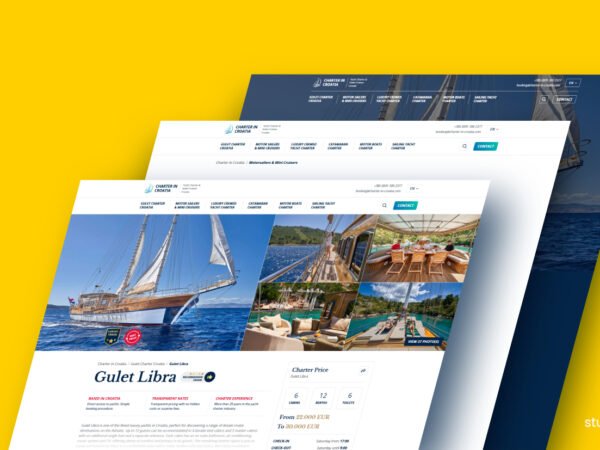
This page is your brochure, your spec sheet, your trust signal, and your close – all at once.
It holds a huge amount of information. It still needs to feel clean without hiding the content behind frictions. This is often the single most development-intensive page on the entire site, and for good reason: photos, specs, pricing, availability, crew details, reviews – they all need to answer one question together.
Is this the yacht for me?
How Pages Connect Into a Conversion Funnel
No yacht page exists on its own island.
It connects to destinations. Destinations connect to itineraries. Itineraries link to guides and FAQs. A visitor lands on a yacht, gets curious about where it sails, reads the route, checks the FAQ – and by the time they hit “inquire”, they’re already sold.
That journey has to be designed on purpose. Left to chance, it falls apart.
These pages aren’t decoration. They’re sales infrastructure. A destination page linking back to available yachts. An itinerary referencing the boats that suit it best. An FAQ answering exactly what a first-time charterer is quietly worried about. Each one pulls the visitor a step deeper.
Photography matters more than most owners expect. Great photos and video don’t just look nice – they trigger imagination. The visitor pictures themselves on that deck. Bad photos do the opposite: they break the spell before it starts.
Here’s the catch, though. This usually isn’t a photography problem. It’s a performance problem. When a site wasn’t built with image handling in mind, images are the first thing sacrificed for load speed – even though they’re one of the biggest drivers of conversion on the entire page.
You don’t have to choose between beautiful and fast. A page loading under 3.5 seconds, full of genuinely great photography? That’s achievable. Insist on it.
Blog content pulls double duty: SEO and trust. Fresh posts tell search engines your site is alive. They tell visitors you’re engaged and know your subject – but only if the content is actually useful, not filler. And content alone won’t fill your inquiry form overnight. Organic traffic compounds slowly. Pair it with paid advertising if you need inquiries sooner rather than later.
One tip if you’re building toward a future launch, not an immediate one: start a blog on your eventual booking domain a year or more before you go live. Write about yachts, destinations, routes. Build an audience before you add transactional pages. It’s not required. But it tends to make launch day considerably less stressful.
Why Ecommerce Logic Breaks on Charter Sites
Here’s where even capable developers trip.
Charter inventory doesn’t behave like retail stock. Pricing is negotiated, not fixed. The admin complexity behind every booking is a different problem entirely from “add to cart, checkout”.
No two operations run the same way. Some manage seasonal fleets across multiple bases. Some work through brokers. Some handle crew in-house; others outsource everything. A generic booking system typically covers about half of what a real operation needs. The other half requires custom development – and that has to be scoped honestly from the start, not discovered halfway through the build.
Documents, Languages, and the Paper Trail
Every charter booking triggers a chain of documents: contracts, crew manifests, safety briefings, payment schedules, cancellation policies – often in multiple languages. A well-built site automates most of this load.
How much automation makes sense depends on the business. An agency usually wants a near-complete inquiry process before a booking agent steps in. A broker often just needs enough to start a conversation, then handles the rest personally. Either way, the client should never see the complexity underneath. That balance is a design decision as much as a development one.
The Backend Floor – Non-Negotiable
At minimum, your backend needs:
- Availability management
- Inquiry routing
- Multilingual content support
- Crew and yacht data handling
- Integration with existing CRM or booking tools (Nausys, MMK, or a local catalogue)
Fall short of this, and you’ve built a brochure pretending to be a business system.
Inquiries, Payments, and GDPR
Charter pricing moves. Season, route, crew, extras – none of it is fixed. Standard checkout flows are built for fixed-price products, and they tend to add friction exactly where a € 40,000 contract needs the opposite.
What works better: a fast, well-designed inquiry system. Or a structured deposit model, where the client pays a reservation fee online and the balance gets handled directly by the booking agent.
Here’s why online payments rarely fit charter pricing cleanly: the number a client ultimately pays is almost never the list price. Discounts, included extras, fuel deposits, skipper fees – it all gets worked out in conversation, not a shopping cart. Force that into checkout, and you add confusion exactly when clarity matters most.
On WordPress builds, Contact Form 7 still holds up well for inquiry handling. It’s flexible enough to capture exactly what a charter operation needs – yacht preference, dates, group size, budget, special requirements – and route it cleanly into your email and CRM systems.
If you’re operating in Europe, GDPR compliance isn’t optional.
That covers your CRM and email infrastructure, not just your website. EU-based hosting – Germany and France are safe default choices – and an EU-based CRM (Brevo is common in the European charter market) cut down the compliance headache considerably. Host on US servers, and expect extra consent flows and data processing agreements.
Bottom line, what hosting company you chose for your website matters a lot.
Managing Yacht Data at Scale
One yacht listing can hold hundreds of data points: specs, safety equipment, cabin layouts, crew profiles, pricing tables, availability calendars, photo galleries, video walkthroughs, documentation, reviews.
Now multiply that across a fleet of twenty or fifty boats.
That’s a content architecture challenge, and it’s easy to underestimate until you’re staring at it. Every piece of yacht data needs to stay consistent, structured, and queryable. Inconsistent specs break filtering. Unnormalized pricing breaks comparisons. What you need is an architecture built around how charter data actually works – not how a generic CMS assumes it should be organized.
The CMS should serve the website. Not the other way around.
Here’s an odd truth: the sites that need the most rework often weren’t built by unskilled developers. They were built by genuinely capable ones who’d simply never worked in this industry before. It’s not an ability problem. The requirements here stay invisible until you’ve seen a few charter operations from the inside – and by the time the gaps show up, the system’s already built around the wrong assumptions.
Yacht Charter SEO: Building It Into the Architecture
SEO isn’t a plugin you install after launch. It’s structural.
Skip this step, and here’s the story that plays out almost every time: an agency builds a beautiful site, launches it, waits for inquiries – and hears nothing. Eventually they call an SEO specialist, who finds redirect chains, flat architecture, zero internal linking, duplicate yacht titles, and years of generic blog content nobody was searching for. Fixing it now costs nearly as much as building it right would have cost at the start.
A charter website that doesn’t rank is just an expensive brochure nobody asked for.
Three Keyword Tiers – and the One Everyone Skips
Most agencies fight for the hardest tier and wonder why nothing moves. There are actually three tiers worth knowing:
- Head terms – “yacht charter Croatia”, “catamaran charter Mediterranean”. High volume, brutal competition. Platforms like Boataround, Click&Boat, and GetMyBoat have spent a decade building the authority to dominate these. Competing here at launch is a long game with long odds.
- Destination-specific mid-tier terms – “crewed catamaran charter BVI”, “bareboat charter Dubrovnik”. Specific enough to cut the noise. Broad enough to carry real volume. This is where mid-sized agencies actually win.
- Long-tail terms – “7-day yacht charter route Kornati islands”, “what’s included in a catamaran charter price”. Lower volume individually, but these convert hard, because the searcher is already deep in the decision. Almost nobody targets this tier on purpose. That’s the opportunity.
Why Charter SEO Doesn’t Play by Hotel Rules
A hotel sits in one place. A yacht charter business often doesn’t – one operator might run boats across the Adriatic, the Greek islands, the BVI, and the Seychelles, sometimes all at once. Each region carries its own search behavior.
A flat catalogue can’t handle that. What you actually need is a content ecosystem: yacht pages linking to destinations, destinations linking to itineraries, itineraries pointing back to the right boats, and FAQ pages answering exactly what a first-timer is already typing into Google before they ever find your site.
The Content Cluster Model
Build regional clusters. Not scattered blog posts – a deliberate system of pages that reinforce each other.
A Mediterranean cluster might include:
- Fleet pages filtered by region
- Destination pages for each charter area
- Real itinerary pages – actual routes, not placeholder text
- Logistical guides on entry requirements, marinas, weather windows
- Editorial content answering what a first-time charterer genuinely wants to know
Search engines reward this. A site with twenty genuinely useful, well-linked pages about the Adriatic will beat a site with one generic “Mediterranean charter” page – every time, regardless of which one launched first. And it compounds: each new itinerary reinforces the destinations it references, each destination reinforces the fleet pages beneath it.
What Has to Be Built In From Day One
- URL structure that reflects your hierarchy.
/destinations/mediterranean/croatia/dubrovnik/beats/destination/?id=4712on every measure that matters – trust, crawl efficiency, click-through rate. Decide this before design starts. Fixing it later means a full redirect strategy. - Unique titles and descriptions on every page, each carrying that page’s primary keyword. “Fountaine Pajot Alegria 67 – Crewed Catamaran Charter Croatia” will always outperform “Charter Yacht 47”.
- Schema markup for listings, reviews, FAQs, destinations. Not optional anymore – AI-assisted search and featured snippets lean heavily on structured data. Skip it, and you’re invisible to a growing share of search traffic.
- Internal linking, planned on purpose. Yacht pages linking to destinations. Destinations linking back to available yachts. FAQ answers linking to relevant pages. Simple to build. Easy to forget if it’s not planned before launch.
- Redirects mapped before launch day. Every old URL needs a 301 pointing to its new home when you relaunch on an existing domain. Miss this, and you lose ranking value you already earned – one of the most common, and most avoidable, mistakes in a relaunch.
Real Authority Takes Time – Here’s How to Actually Build It
Domain authority – how much search engines trust your site, built through backlinks – took the big aggregators a decade to accumulate. You’re not catching up overnight, and that’s fine.
What you can build instead is topical authority: being the most thorough, most useful resource on your slice of the charter world. Your regions. Your fleet types. Your client. You build it the same way real expertise gets built anywhere – by going deeper than anyone else bothers to.
A generic “yacht charter in Croatia” article exists on ten thousand sites. A detailed guide to navigating Kornati National Park by catamaran – entry permits, anchorages, fuel stops, what to tell your guests to pack – exists on almost none of them. That gap is usually best filled by people who’ve actually sailed the route, not by a keyword list. Real charter expertise is your edge here. It’s the one thing AI-generated content can’t fake convincingly.
Compound Authority: Why This Gets Easier Over Time
Search engines score ranking signals across your whole domain, not page by page. A strong Adriatic itinerary makes your Croatian fleet pages easier to rank. A well-cited pricing guide builds trust that carries across the site. A sharp FAQ picked up in AI search results generates impressions you’d otherwise be paying for.
Every useful page raises the floor for every other page you own. That’s why agencies who publish consistently for two or three years become genuinely hard to displace – and why relying on paid traffic alone leaves you one budget cut away from losing everything you built. Organic authority isn’t just a growth channel. It behaves like a business asset with real, measurable value.
What to Track and What to Ignore
Total website traffic is the number most owners watch. It’s usually the least useful one on the dashboard.
Track this instead:
- Organic traffic to high-intent pages – fleet listing, yacht pages, destinations. Growth here means your SEO is actually working.
- Keyword position for core regional terms, weekly. Position 11 sliding to 6 over three months? Meaningful. Position 3 dipping to 4 overnight? Noise.
- Inquiry conversion rate from organic visitors. Traffic that doesn’t convert points to weak targeting, weak landing pages, or both.
- Page-level performance – which destinations pull the most clicks, which yacht pages hold attention longest. This tells you exactly where to invest next.
Ignore, mostly: raw impressions on their own, bounce rate in isolation, social referral traffic, and rankings for keywords you never actually targeted.
FAQ
How much does a yacht charter website cost?
A single-yacht site done properly starts around € 5 000 – € 10 000. A fleet site with custom booking logic and integrations typically runs € 10 000 – € 50 000. Enterprise builds go beyond that, scoped to the specific systems involved.
Do yacht charter websites need online payments?
Rarely as a full checkout flow – charter pricing is negotiated, not fixed. Most sites do better with a strong inquiry system, sometimes paired with a deposit model where a reservation fee is paid online and the balance is handled with the booking agent directly.
Why doesn’t ecommerce logic work for charter websites?
Negotiated pricing and the admin complexity behind each booking – contracts, crew, multilingual documents, CRM integration – behave nothing like fixed-price retail. A generic ecommerce system typically covers only half of what a real charter operation actually needs.
How many pages does a charter website need?
At minimum, 8-15 distinct layouts: homepage, fleet listing, yacht pages, destinations, itineraries, guides, FAQ, blog, and contact – each built as its own structure, not a single flexible template stretched too thin.
How long does yacht charter SEO take to show results?
Longer than most owners expect, and it compounds rather than spikes. Meaningful keyword movement usually plays out over months. The sites dominating regional search got there through years of consistent, well-structured content – not a single optimization push.
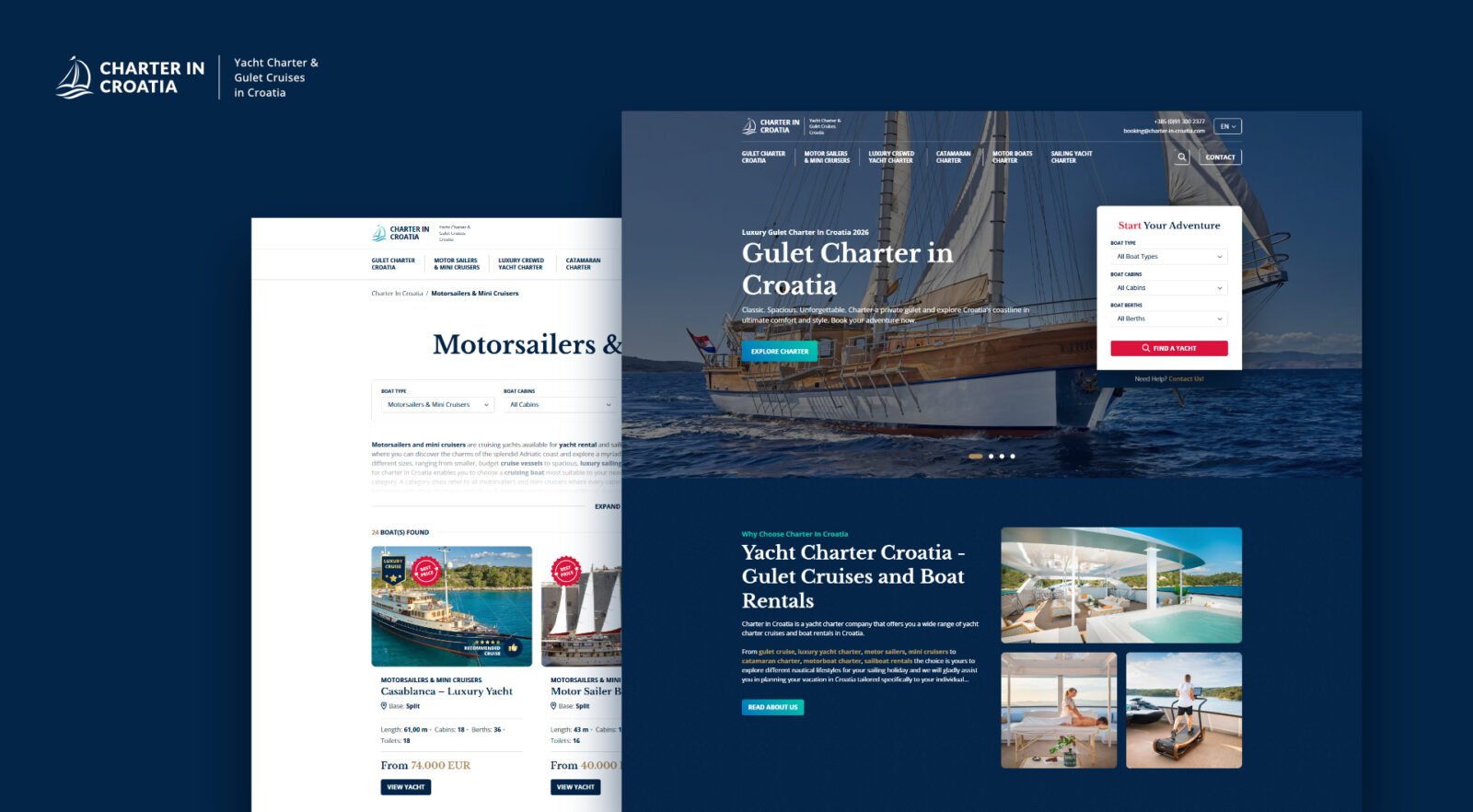
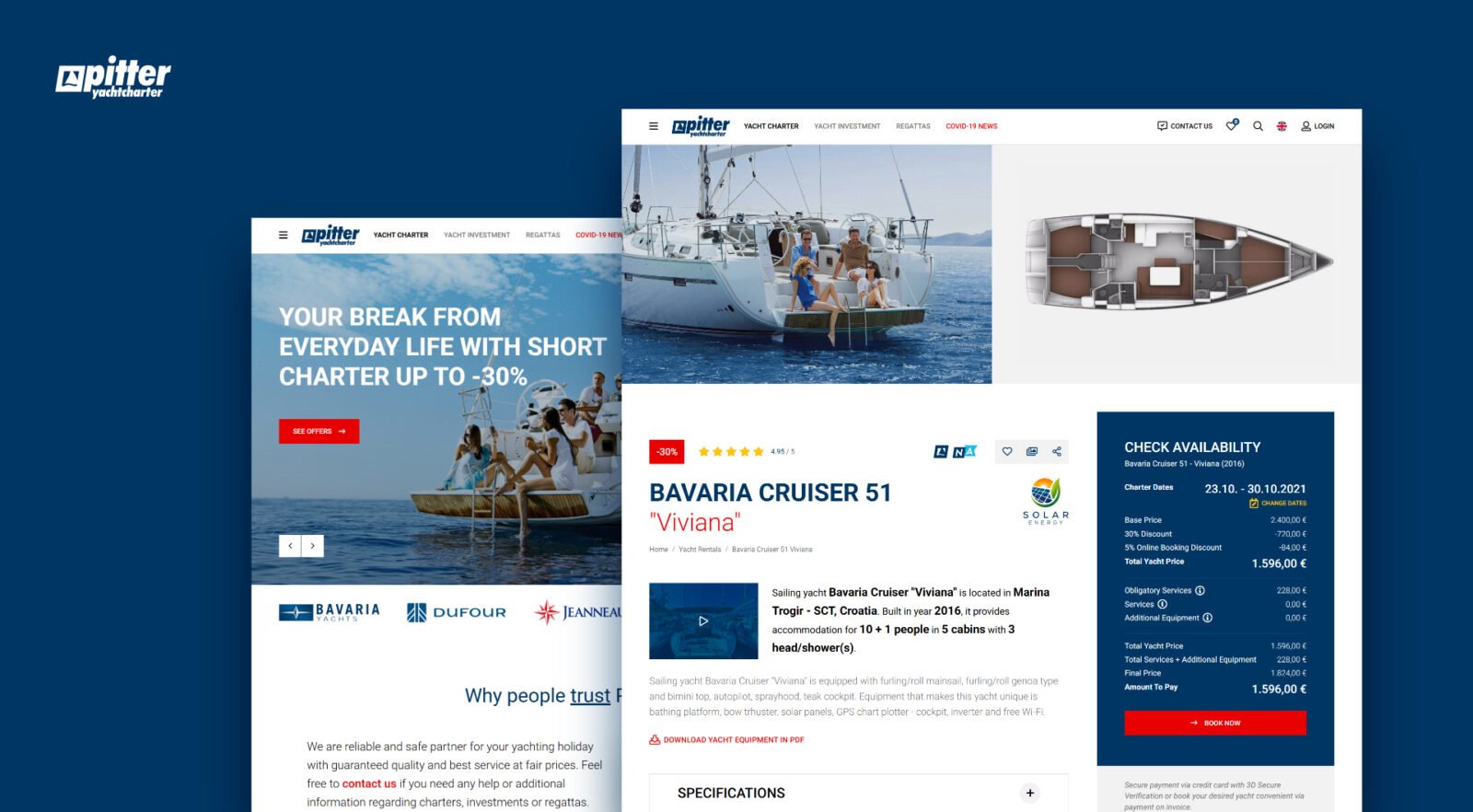
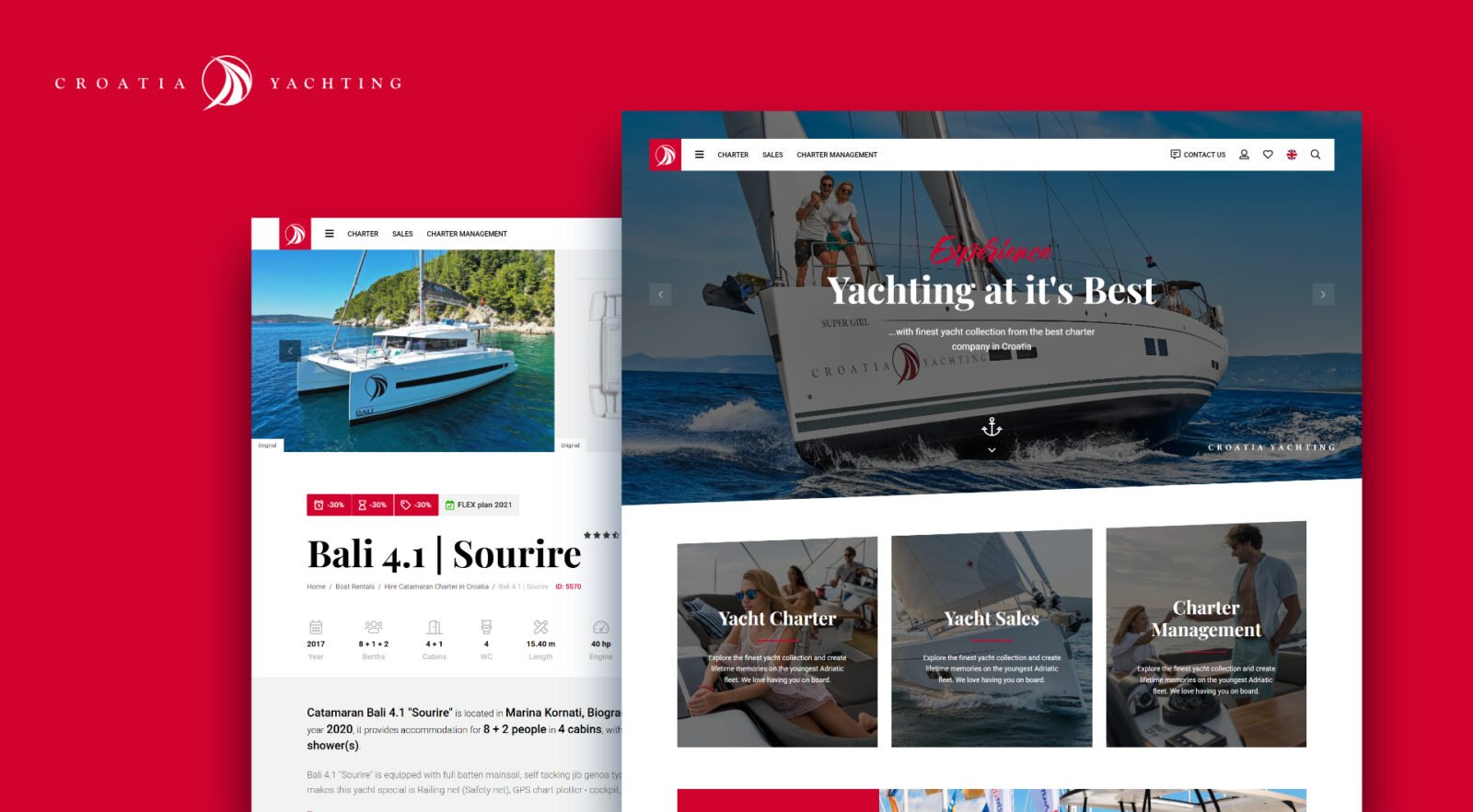
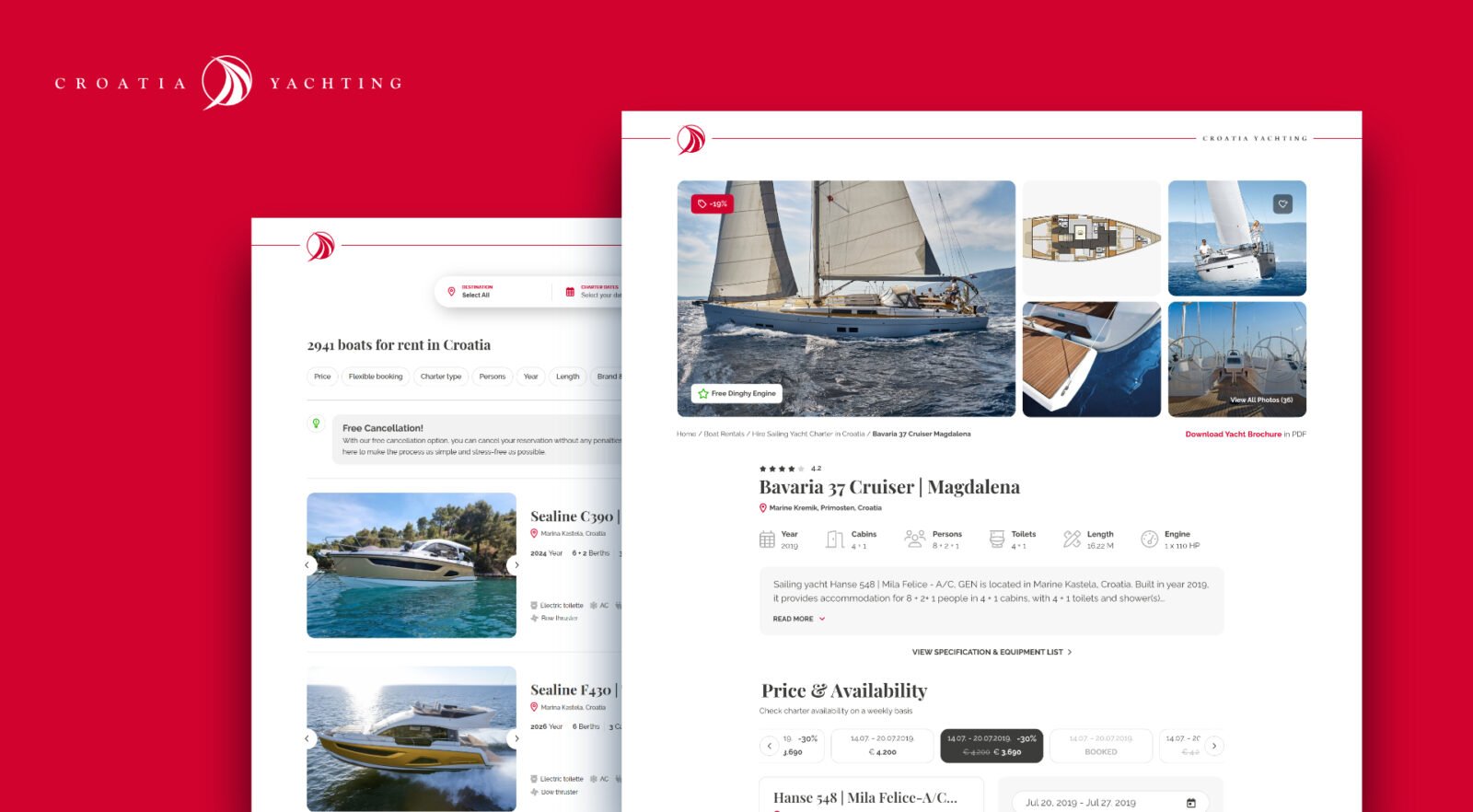
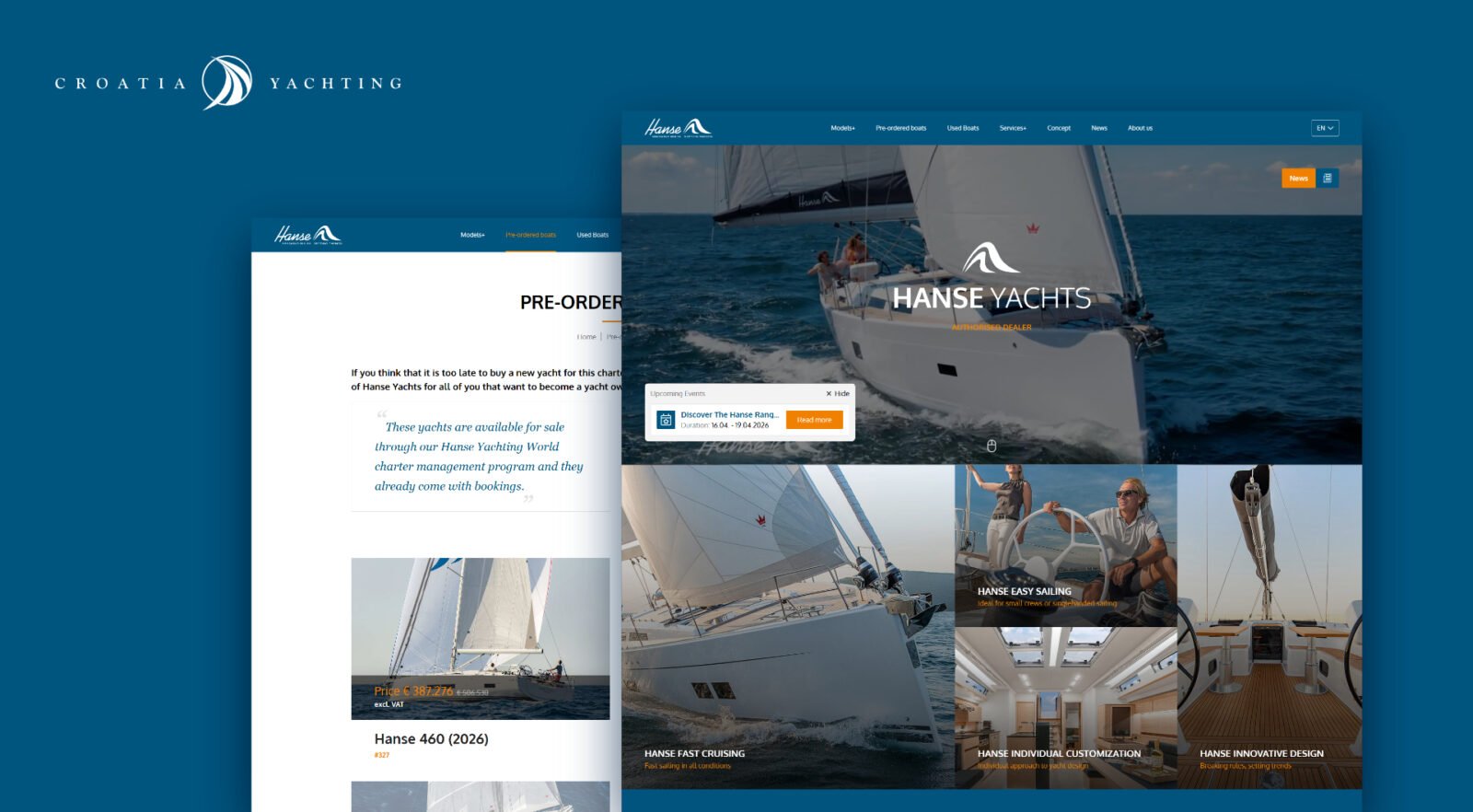
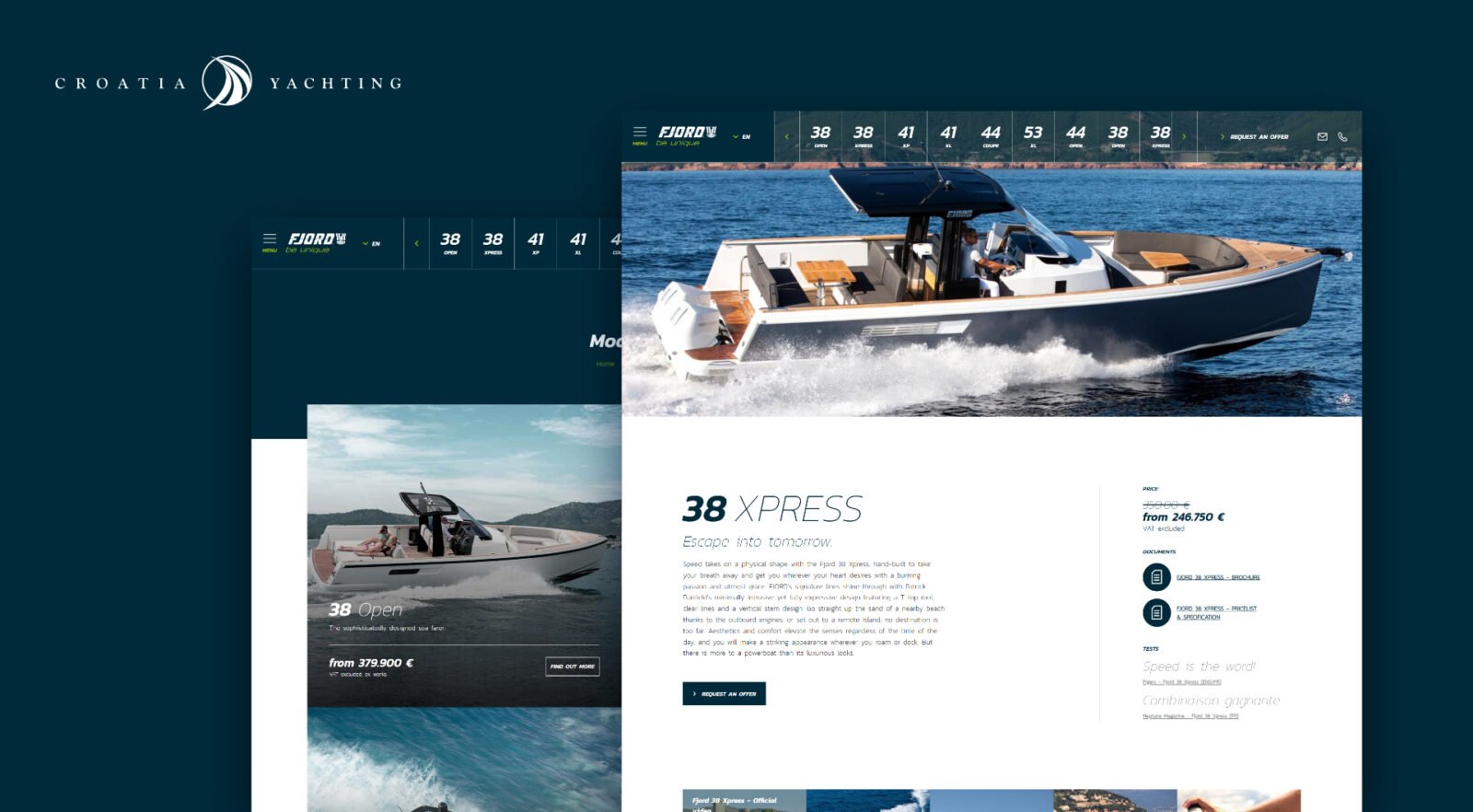
If you feel overwhelmed, please check out few selected websites we built for our yacht charter clients in order to get a sense of what and how needs to be designed and developed:
Next step: if you’re not sure where your current site stands against any of this, that’s usually the fastest thing to find out first. Get a free audit – we’ll tell you exactly what’s working, what isn’t, and what it would take to fix it. No pitch, no pressure.
Studio Simple is a full-stack design and development studio, built for businesses that need a website to work as a reliable business tool – not a source of ongoing stress.