

Search engines refused to index their pages. Website was crawling with bot traffic. And the team was scared to click “update” on their own website because last time they did it the website crashed.
That’s where Conviva Maris stood when we contacted them.
Conviva Maris runs private yachting charters along the Adriatic – bareboat rentals, luxury crewed yachts, itineraries built around the client, not the calendar. The business itself runs like a tight ship. The problem was their website that each year ended up performing worse and worse.
A Site Held Together by Duct Tape
Years of reactive fixes had turned the backend into a minefield. Plugins were doing jobs they were never built for. The design system had quietly fallen apart. Cookie consent tools ran outside their intended scope, and the update process – the very thing meant to keep a site secure – had become the source of instability.
This wasn’t neglect. It was the natural result of patching a website instead of engineering one.
And Conviva Maris had reason to be wary. They’d been burned twice already by contractors who left things worse than they found them. By the time we reached out to them, “caution” wasn’t just a feeling – it was policy.
We get it. Too many agencies chase the invoice, not the outcome.
We build things clients can actually trust and own.
We Audited First. Then We Talked.
Before a single line of code was written, we ran a full brand and website audit. Not to pad the quote. To find the truth. Slapping a fresh design over a broken foundation doesn’t fix anything – it just hides the cracks under new paint. The audit told Conviva Maris exactly what was broken, why it was broken, and in what order it needed fixing.
What we found:
- A design system that had fully broken down
- Third-party plugins patched into roles they were never designed for
- An update process so fragile it had become a known failure point
- Code bloat actively dragging down site stability and visibility
- Bad on-page SEO
No guesswork. Just a clear map of the damage.
What We Actually Built
We owned the entire build – design, development, deployment. No subcontractors, no handoffs, no diluted accountability. Why does that matter? Because when one team owns the whole stack, decisions stay coherent. Nothing gets lost in translation between the designer and the developer. There’s one point of contact when something needs an answer.
Here’s what that looked like in practice:
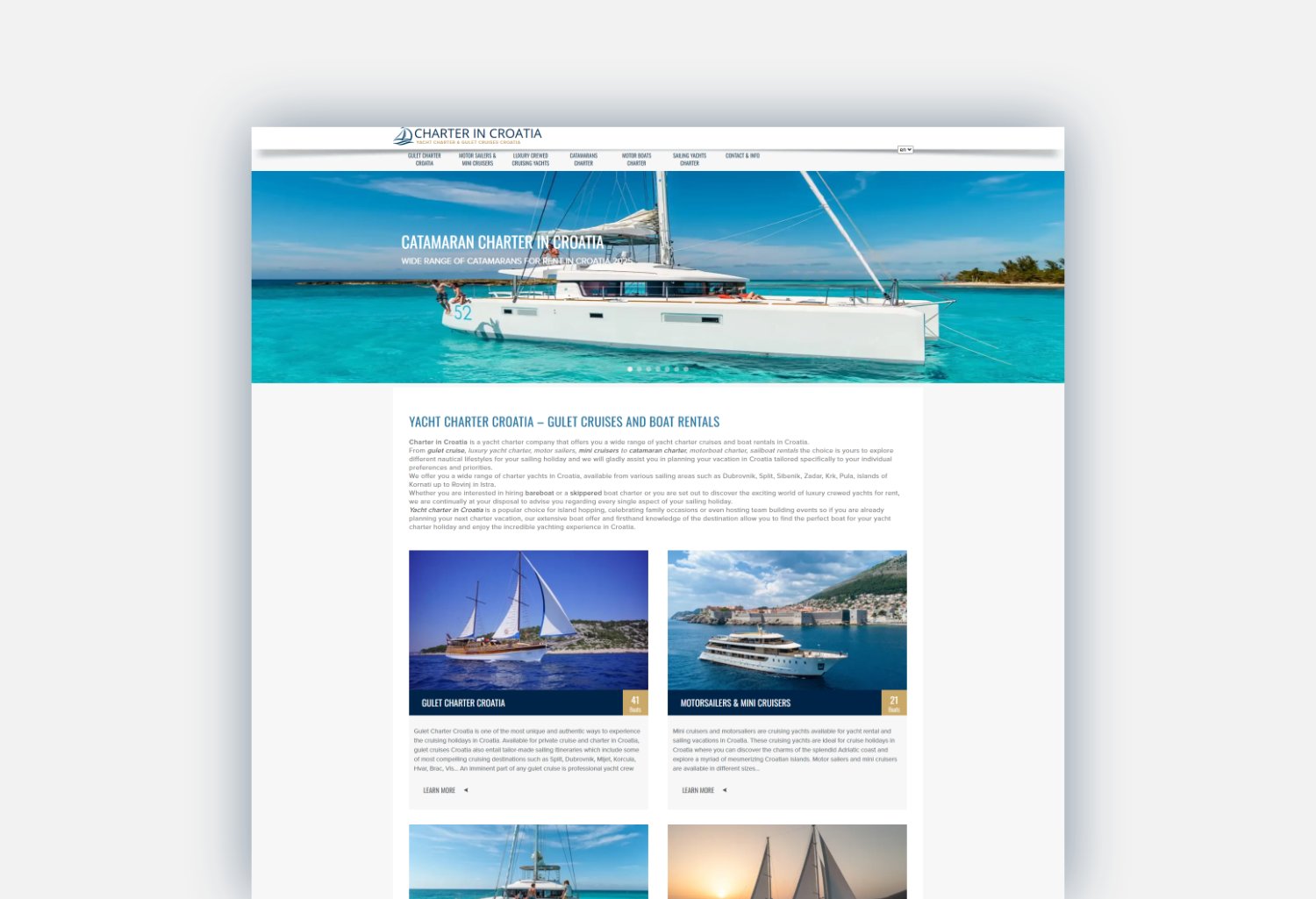
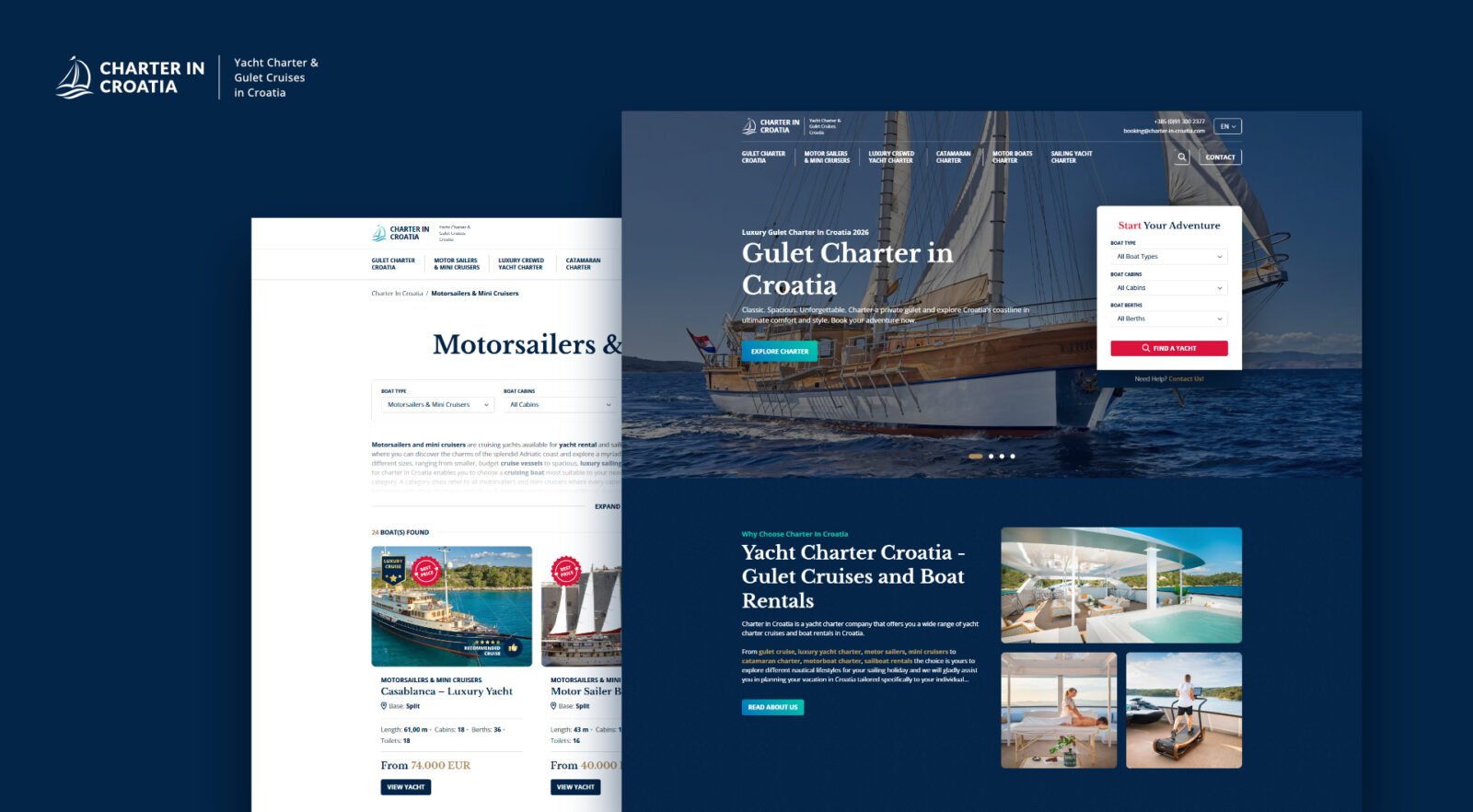
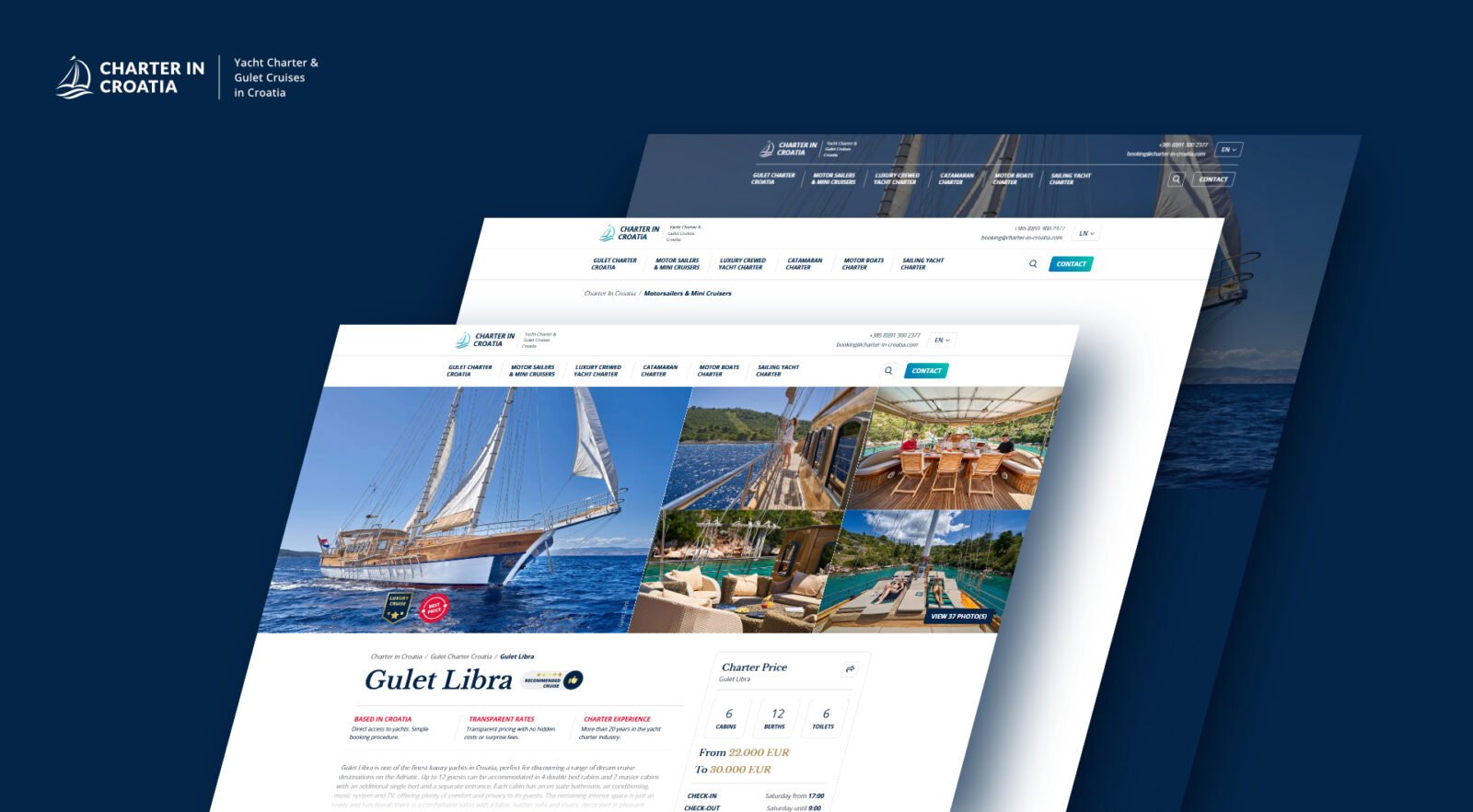
- Modern interface templates for the index, product listing, price listing, contact, guide and itinerary listings, single article, itinerary, and single product pages
- A custom WordPress module system, so the Conviva Maris team can manage content without third-party plugins
- Full server migration
- Rebuilt and properly tested contact forms
- Clean GTM and analytics integration
- Cookie consent brought fully into compliance
- A restored update process that finally works the way it should
- Old URLs cleanup and redirection
The bigger goal underneath all of it: cut the client’s dependence on the pile of third-party plugins previous developers had left behind, and replace it with a custom system Conviva Maris actually controls.
The website has gone from a liability to a business asset.
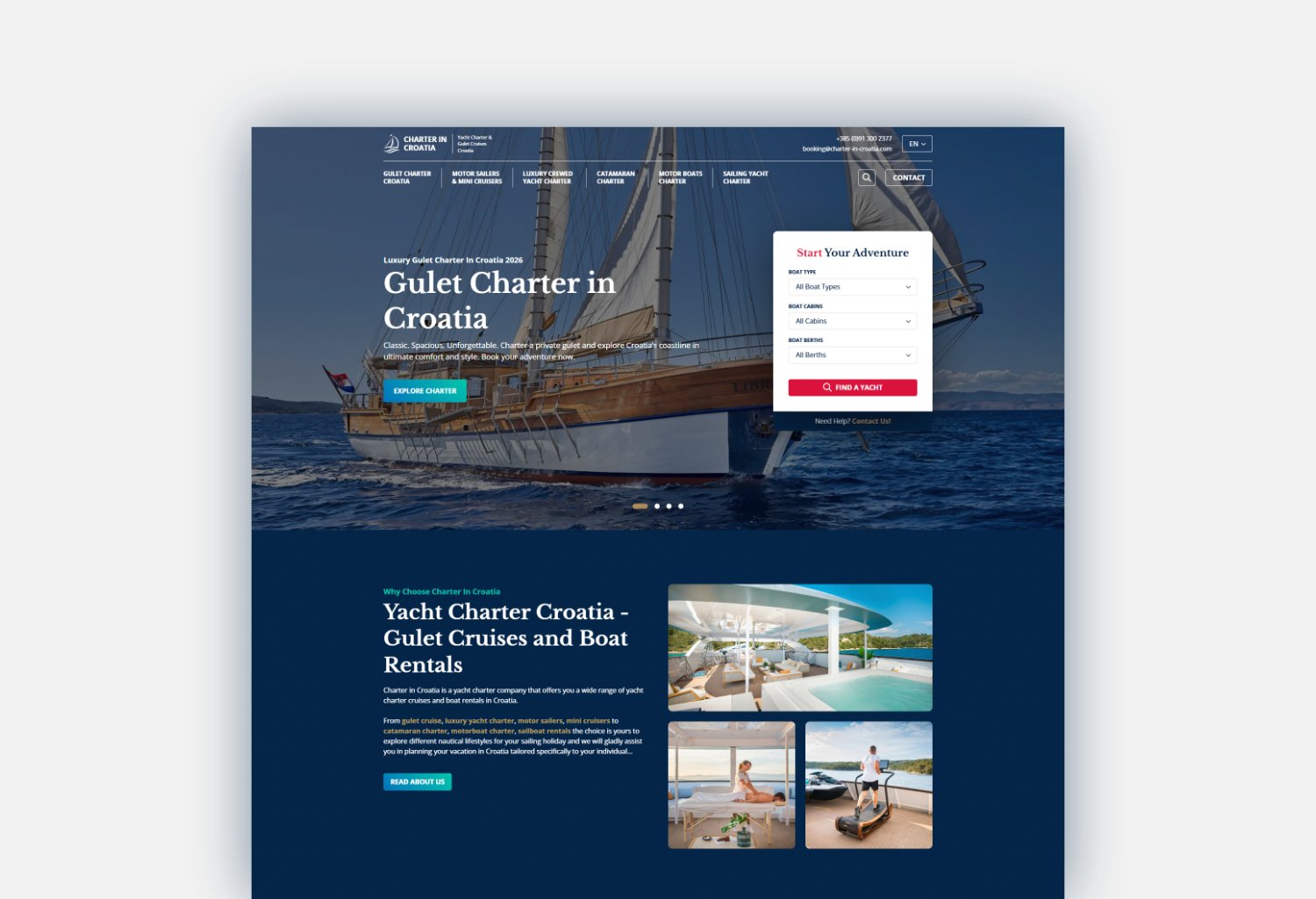
A Website That Works
Pages that search engines had refused to touch started ranking. Website ranking moved from average 40 place to 17 after 3 months. A lot of pages moved to the first page in search results.
Mobile and desktop experiences got tuned for the people actually booking these charters. And maybe most importantly: the team can now update their own site without holding their breath.
The rollout itself is phased, by design and by the client’s request. Legacy pages are being replaced systematically rather than all at once, which keeps the site stable and fully operational throughout – no risky, single-shot launch.
Client's Review of Our Work

"After several bad experiences with other contractors who left us with a non-functional website full of errors, we approached our collaboration with Zeljko from Studio Simple with a degree of caution. However, from the very first communication, we saw that his approach was completely different... He didn't just 'build us a website', he restored our trust in digital collaborators. Zeljko's goal wasn't just to 'complete the job and get paid.' Throughout the entire process, he gave concrete suggestions, warned us in advance about things that could cause problems later, and invested his time to make the website as good as possible. He leaves nothing to chance: he checks and tests everything, and explains decisions clearly and sensibly."

— Maja V., CEO, Conviva Maris
Why This Approach Works
A website is an infrastructure. And like any infrastructure, how it’s built determines how well it holds up under real-world pressure.
The Conviva Maris project shows what happens when a rebuild is treated as an engineering problem instead of a cosmetic one:
- We audited before we acted.
- We built systems the client can actually own.
- We explained the reasoning behind every decision.
- We tested everything, thoroughly.
- We stayed engaged through the phased rollout – we didn’t vanish the moment the invoice cleared.
Got a website holding your business back? Reach out and let’s have talk.
Frequently Asked Questions
Do you work with businesses outside Croatia?
Yes. Studio Simple works with clients across Europe and beyond. Most of our process runs asynchronously – we communicate clearly, document every decision, and deliver without needing to share a time zone.
We already have a website. Can you fix it rather than rebuild it?
Sometimes. The audit tells us which. Some sites need targeted repairs. Others have accumulated so much technical debt that a clean rebuild ends up faster and cheaper. Either way, we’ll tell you which path makes sense – and why – before any work begins.
What does the audit actually cover?
For websites, we look at technical health, indexation status, backend stability, design consistency, and conversion flow. For brand identity, we look at brand recognition (if it exists), color palette and accessibility, typography hierarchy and legibility, logo structure and scalability, and the quality of your brand guidelines documentation (if one exists). You’ll get a clear written summary of what’s working, what isn’t, and what to fix first. It’s a real assessment – not a sales pitch in disguise.
How long does a project like this take?
A full rebuild at this scope – audit, design, custom development, migration, and QA – typically runs eight to fourteen weeks, depending on content complexity and how fast feedback comes back. We’ll give you a realistic timeline up front, not an optimistic one we can’t keep.
Will we be able to manage the site ourselves after handover?
That’s a requirement, not a bonus. Every site we build comes with a backend the client can actually use – no dependency on us for routine updates, no mystery settings, no plugin roulette. You should feel confident in your own platform, full stop.
Studio Simple is a full-stack design and development studio. We build websites meant to function as reliable business tools – not sources of ongoing stress. If your current site is underperforming, is unstable, or invisible to the people you’re trying to reach, tell us about it.